

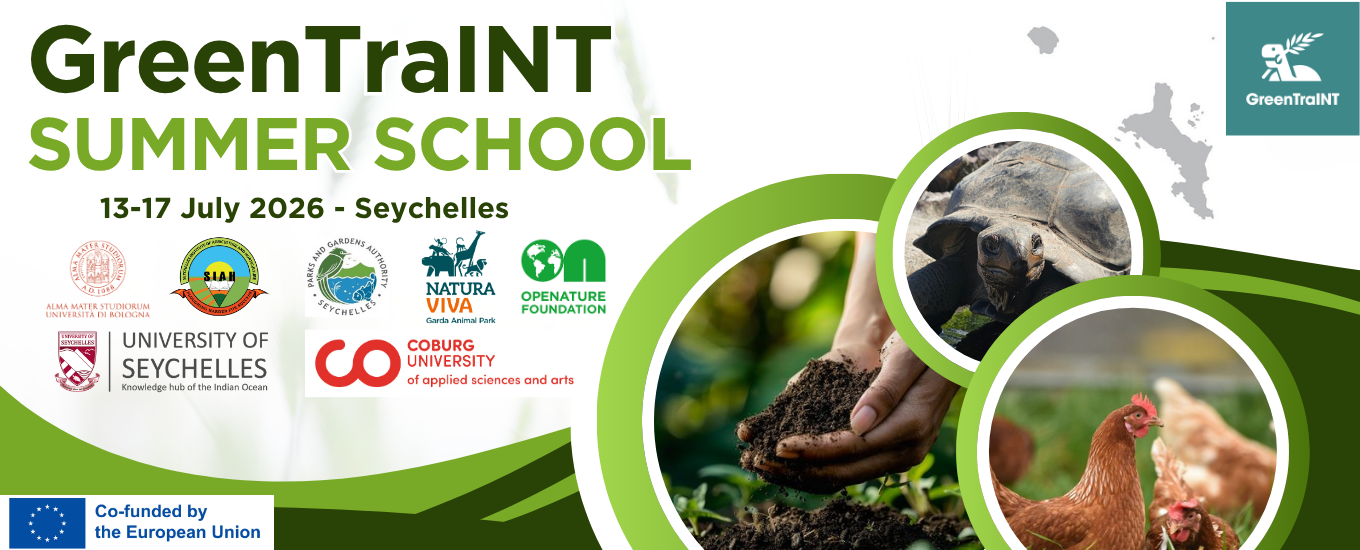
THE SUMMER SCHOOL
(Seychelles, 13-18 July 2026)
The Seychelles archipelago is facing a crucial challenge in balancing food security, environmental sustainability, and biodiversity conservation. Currently, approximately 90% of plant- and animal-based food consumed in the country is imported, highlighting the urgent need to strengthen local production systems and enhance national resilience to external shocks such as global trade disruptions, climate change, and socio-economic crises. At the same time, the Seychelles possess an extraordinary ecological heritage, with nearly half of the terrestrial territory already protected, making biodiversity conservation a top national priority. In this context, innovative and sustainable approaches capable of integrating food production with environmental protection are becoming increasingly essential.
The GreenTraINT Summer School arises from the necessity to promote advanced knowledge and professional competences in sustainable agriculture, livestock farming, and biodiversity conservation, while fostering the development of innovative solutions adapted to the unique characteristics of small island developing states. Traditional intensive production systems are often unsuitable for fragile insular ecosystems, where limited land availability and the need to preserve natural habitats require alternative and environmentally friendly strategies. Agroforestry systems, sustainable livestock practices, vertical farming, renewable-energy-based cultivation systems, and circular economy approaches represent promising pathways to improve local food production capacity while simultaneously protecting ecosystems and restoring degraded areas.
In this framework, higher education institutions play a pivotal role in supporting the ecological transition and the implementation of the principles of the European Green Deal through the development of knowledge, green skills, and innovative educational pathways. However, despite the increasing demand for qualified professionals in agriculture, livestock farming, and conservation sectors, Seychelles currently lack dedicated higher education programmes specifically addressing these fields. GreenTraINT aims to bridge this educational and professional gap by designing and implementing an international and interdisciplinary intensive training programme focused on sustainability-relevant sectors and aligned with the needs of local communities, institutions, and the private sector.
The GreenTraINT Summer School represents the pilot action of this ambitious initiative. Organized through the collaboration between the University of Bologna (Italy, UNIBO), the University of Seychelles (Seychelles), the University of Applied Sciences Coburg (Germany, UNICOB), the Seychelles Institute of Agriculture and Horticulture, Openature, ZOOM Foundation and the Seychelles Parks and Gardens Authority, the Summer School will offer a multidisciplinary and international learning environment for students, young researchers, professionals, and stakeholders interested in sustainable land management and biodiversity conservation.
The programme will focus on three interconnected thematic pathways: (I) Sustainable Agriculture; (II) Sustainable Livestock Farming; and (III) Conservation of Natural Areas and Biodiversity. Participants will have the opportunity to deepen their understanding of theoretical, methodological, and applicative aspects related to sustainable food production systems, agroecology, food safety, biodiversity conservation, and innovative cultivation technologies such as agroforestry and vertical farming. Particular emphasis will be placed on the integration between scientific knowledge, practical training, and real-world applications.
The Summer School will combine lectures, seminars, practical activities, workshops, and field experiences, including hands-on activities organized in collaboration with the Seychelles Parks and Gardens Authority. International experts from European and Seychellois partner institutions, together with external specialists in food safety and sustainability, will contribute to the programme by sharing scientific expertise, innovative methodologies, and applied experiences. Moreover, the initiative will foster networking opportunities among participants, academic institutions, public authorities, and private stakeholders, encouraging long-term collaborations and the exchange of applied knowledge between Europe and Seychelles.
Ultimately, the GreenTraINT Summer School aims to contribute to building local capacity, strengthening professional education, and supporting the sustainable development of Seychelles by empowering a new generation of professionals capable of addressing the interconnected challenges of food security, climate resilience, and biodiversity conservation in small island ecosystems.
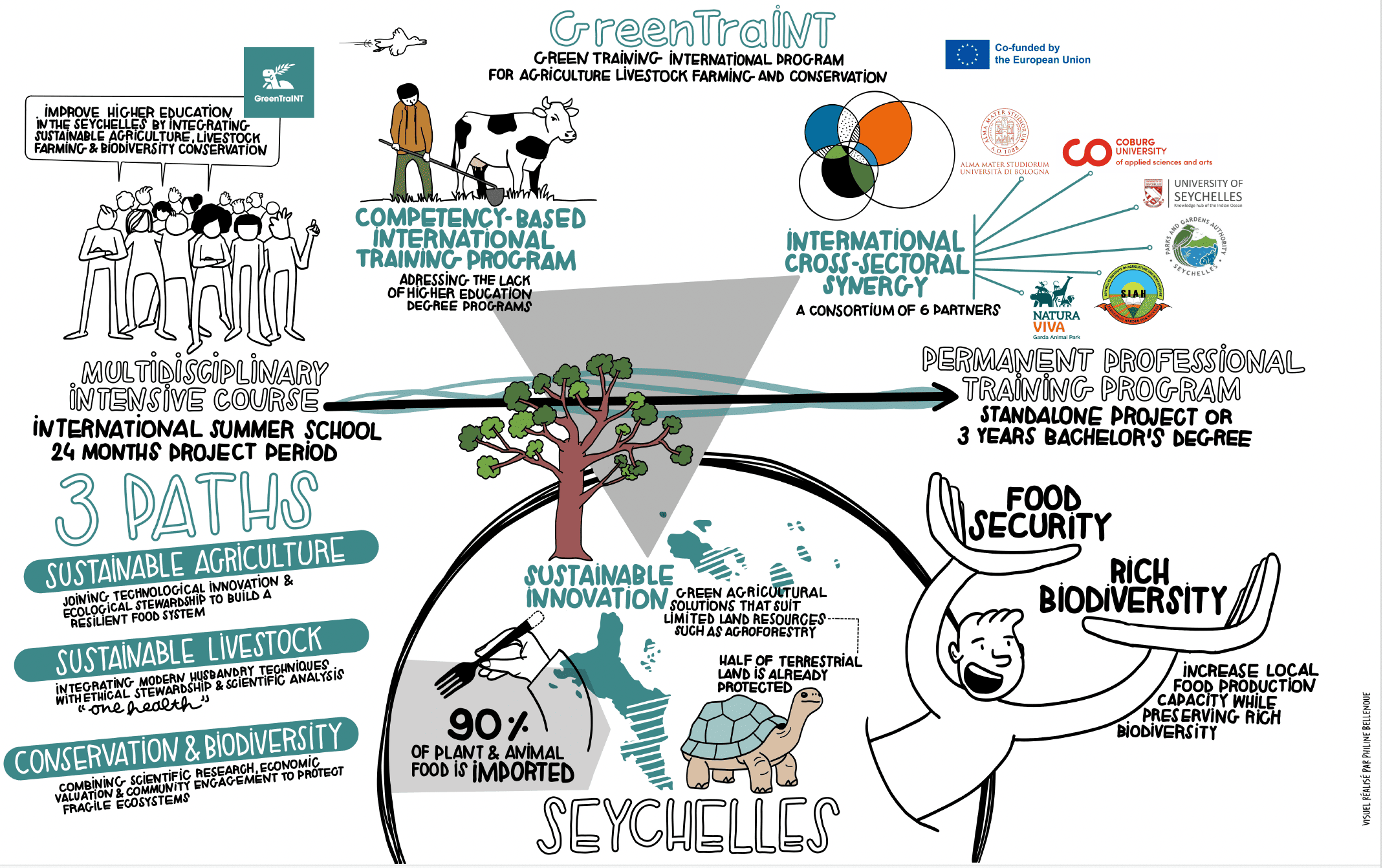
PATH 1: SUSTAINABLE AGRICULTURE
The Sustainable Agriculture path focuses on practices that enhance food production while conserving resources. Key components include organicfarming, soil conservation, and the use of renewable eneray sources in agricultural practices, supporting local economies and reducingdependency on imports
PATH 2: SUSTAINABLE LIVESTOCK
This training path aims to improve livestock management through sustainable practices that minimize environmental impact. Emphasis is placed on animal welfare, pasture management, and integrating livestock into agroecosystems for better productivity and sustainability.
PATH 3 CONSERVATION AND BIODIVERSITY
This path provides training on effective management and conservationstrategies of natural areas in Seychelles. It includes habitat restoration, maintaining ecological integrity, and engaging local communities in conservation efforts, aligning with national biodiversity goals.
FOR ALL 3 PATHS:
L
VENUE
The Summer School will take place at the SIAH Campus in Anse A La Mouche, Mahe Island.
Accommodation
Participants are kindly requested to make their own hotel reservations in or near the Summer School venue to facilitate access to the site daily.
Electronic Travel Authorization
All travellers to the Seychelles are required to complete prior to departure. Failure to comply may lead to a penalty fee upon arrival. The ETA can be applied for three weeks to one month prior to departure. You will need your flight reservation, invitation letter, accommodation reservation, to apply for an ETA. Please, see the link below for the submission of application.
https://seychelles.govtas.com/en
Flight Arrivals
All flights will arrive at the Seychelles International Airport on Mahe Island.
Communication
While email will remain the main communication platform, a WhatsApp named “Summer School 2026” will be created to facilitate exchange of information on daily activities of the summer school. For our visitors who wishes to get a local sim card, this can be done upon arrival at the airport.
Currency
The Seychelles Rupee (SCR) is the local currency. The exchange rate is EURO equals SCR 15.85 as of May 26, 2026. You can exchange money at many authorized banks (at the arrival airport) and bureau de change.
Most banks have ATMs and you can use you VISA card to withdraw money or pay with a POS in shops.
Credit cards
Most major credit cards (MasterCard, American Express and VISA) are widely accepted. In addition to credit cards, it is advisable to carry easily exchangeable currency in cash.
Banking hours
Banks are open from Monday to Friday between 0800hrs to 1700hrs.
Languages
Creole, English and French are Seychelles’ official languages. However, English is widely spoken and the Summer School will be conducted entirely in English.
Weather and Time Zone
In July, the Seychelles experiences its coolest and driest period of the year, driven by the Southeast Trade Winds. Expect comfortable temperatures between 24 and 28 degrees centigrade, refreshing ocean breezes, and roughly four days of brief, light rain for the entire month.
You can obtain the current weather forecast for Seychelles through this link: https://www.meteo.sc/
Power plugs and outlets
In Seychelles the most common plug is Type G, which has two flat parallel pins and a grounding pin. Seychelles operates on a 230V supply voltage and 50Hz. You are advised to carry a power plug adapter if your appliances do not conform to the above specifications.
Health and Insurance
The host organizations in Seychelles assumes that as an invited participant to the Summer School, you are in good health and have no illness that might prevent you from travelling to or participating in this event. You are advised to arrange your own travel insurance against sickness, accident and third-party risk for the period of the Summer School.
LECTURERS
Paola Mattarelli is an Associate Professor in Agricultural and Environmental Microbiology. Her research activity focus on beneficial bacteria for application in human and animal health and in agriculture. She is a taxonomist and she is secretary of the Subcommittee on taxonomy of Bifidobacterium, Lactobacillus and related organisms. She is member of Editorial board of International Journal of Systematic and Evolutionary Microbiology. Member of COST action: "Exploiting Plant-Microbiomes Networks and Synthetic Communities to improve Crops Fitness”. MC of COST action CA22109 - Medicinal plants for animal health care: Translating tradition into modern veterinary medicine
ORCID 0000-0001-9112-4786

Paolo Trevisi is full professor in Animal Nutrition and Feeding since 2024. His primary focus is to improve the sustainability and the circularity of the livestock food chains by developing innovative feeding and management strategies with special emphasis on monogastric. The key objective of his group is to reduce the dependency of pig production on the use of antibiotics and the excess of minerals which are recognized as primary spread origins of antibiotic-resistant bacteria and environmental risk factors. The associate research topics are: new dietary strategies to reduce psychophysical stress occurring during the weaning (functional feed); v) study of nutraceuticals to improve the gut health and prevent dysbiosis in young animals; understand the risk factors to prevent the aggressive behaviours to design tailored solutions and reduce the animal sufferance and production losses. He is vice-chair of the Pig study Commission of the European Federation for Animal Production (EAAP). He is partner in several EU and Reginal projects and is co-authors more than 120 publications on peer review journals with h-index=28.
ORCID 0000-0001-7019-6828
Maria Luisa Dindo is full professor of General and Applied Entomology since 2021. Her scientific interests mainly deal with the biology and rearing (both in vivo and in vitro) of parasitoids, especially Diptera Tachinidae and the rearing of potential hosts or preys of entomophagous insects. She is also interested in studying the sustainable control strategies of insect pests, in particular the new associations between indigenous parasitoids and exotic insects introduced in Italy. From 2017 to 2023, she was a co-convenor of the “Mass Rearing and Quality Assurance” Working Group (MRQA WG) of the International Organization for Biological Control (IOBC Global), which she joined in 2003. In this role, she organized the XV-MRQA workshop held in Bologna (5-9 September, 2022).She is an Executive Editor of the journal “Bulletin of Insectology” and a component of the Editorial Board of the journals “BioControl” and "Entomologia Experimentalis et applicata".
ORCID
Francesco Spinelli has expertise in plant pathology and crop management. His research aims at reducing the use of xenobiotic pesticide, without reducing crop production and quality. To achieve this goal, the research focused on deciphering the plant- microbe interactions with a specific attention to bacterial pathogens of fruit crop. He has long term international collaborations on the development and validation of BCAs for Pseudomonas syringae and Erwinia amylovora. He coordinated the ERASMUS MUNDUS International Master in Horticultural Sciences. He has supervised/co- supervised 9 PhD students and 23 Post-docs. (Scopus ID: 56358433700 H:32, 111 papers)
ORCID 0000-0003-3870-1227
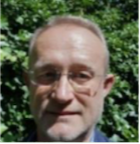
Lorenzo Barbanti is Associate Professor in Agronomy and Crop Science, besides having spent a relevant share of his work life in the R&D department of a large agro-food and agro-industrial group. His research activity focuses on food (cereals, pulses and herbs) and non-food crops (biomass crops, others), their suitability for the ambient conditions in warm-temperate areas in a framework of changing climate, and ways to overcome plant growth constraints such as drought and salinity. He has served various roles in local, national and international research projects, including projects focusing on the nutritional and bio-energy needs of rural communities in developing countries, and refugee camps of populations permanently displaced from their countries. He is (co)author of 85 works in Scopus (h-index, 28).
ORCID 0000-0003-0440-9156
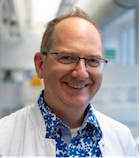
Matthias Noll is a Professor in Bioanalysis and Environmental Microbiology. His research activity focuses on fungal and bacterial diversities in crop plants and forests and associated soils, differentiating metabolically active and total community members. Additionally, he is an expert in the risk assessment of bio-based and biodegradable plastics in agricultural practices under ambient and future climate regimes. Using multivariate statistics, he correlates abiotic and biotic parameters to fungal, bacterial, and archaeal community compositions to disentangle the main factors influencing ecosystem functioning. He is MC member of the cost action CA22158 “Exploiting Plant-Microbiomes Networks and Synthetic Communities to improve Crops Fitness (CropBiomes).
ORCID 0000-0002-9981-5968

Stefan Simm is a Professor for bioinformatics and data science. His research activity focuses on developing explainable AI (XAI) related to the analysis of Multi-Omics as well as statistical analysis. His experience in Omics spans different organisms, organs and conditions in research topics of climate change, SMART farming and medical applications. Beside the biological interpretation the analysis includes data processing, , visualization and training of XAI. Such AI models allow to extract the most important features and pattern to uncover interactions within regulatory mechanisms from an holistic perspective. He is MC member of the cost action CA22157 “RECROP: Reproductive Enhancement of CROP resilience to extreme climate”.
ORCID: https://orcid.org/0000-0001-9371-2709
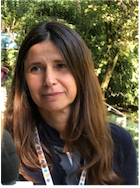
Caterina Spiezio, PhD in psychobiology. Through her PhD research project in Madagascar she had the opportunity to understand the necessity and the importance of in situ conservation. She had a research fellowship at Goldsmith College, UK, and three-year of research fellowship at the International School for Advanced Studies in Trieste, Italy. From 2006 she has been employed at Parco Natura Viva as researcher and in 2008 she became the head of Research and Conservation Department focusing on animal behaviour, welfare and cognition, adding in situ Conservation projects. She is author of peer-reviewed articles, commentaries and proceedings. She was the organizer of the Erasmus + InterZoo Summer School. She is member of the EAZA Animal Welfare Working Group and also member of the EAZA Conservation Translocation Working Group. She is the senior researcher of the Seychelles conservation project with scientific publication on Aldabra giant tortoises
ORCID 0000-0003-1326-1835
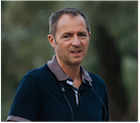
Camillo Sandri, DVM, has a PhD in Agricultural, Environmental and Food Science and Technology. He is the tutor for veterinary student internships from different Italian Universities and supervisor of animal health and welfare research projects. He is member of Scientific Committee of the Annual National Research and Conservation Conference hosted by Parco Natura Viva every year. He is EEP (European Endangered Species Programme) Committee member of the Northern Bald Ibis, and vet advisor for the European Bison Reintroduction Project in Romania. He is also member of Italian association of veterinarians for wild and exotic animals (SIVAE). He has been published peer reviewed articles and has been invited from Universities to talk about zoo animal health, care and welfare. He is the project manager and senior researcher of the Seychelles conservation project with publications on Aldabra giant tortoises.
ORCID 0000-0001-7379-7725

Daniel Etongo is an Associate Professor in Environmental Sciences at the University of Seychelles (UniSey) and the Dean for the Faculty of Research and Innovation. He completed his PhD in Agriculture and Forestry from Helsinki University, Finland and has published over 50 articles in international peer-reviewed journals. His area of expertise includes land suitability analysis,, socio-ecological systems modeling, biodiversity assessment, vulnerability assessment, and climate adaptation, climate-smart agriculture, and nature-based solutions. At UniSey, Prof. Etongo teaches in the BSc Environmental Sciences and MSc Marine Science and Sustainability programs. He contributes to curriculum design, course development, and mentorship of new lecturers and teaching assistants. He also plays a key role in strengthening UniSey’s research profile through leadership, collaboration, and consultancy work. Prof. Etongo previously served as the Dean for the Faculty of Business and Sustainable Development at UniSey.
ORCID: https://orcid.org/0000-0002-8237-0843

Uvicka Bristol is undertaking doctoral studies at University of Seychelles in collaboration with University of Canterbury. Her research interests focus on climate change resilience, coastal management, agroforestry, the blue economy, and ocean governance, with a particular interest in disaster risk reduction, climate change adaptation and environmental sustainability in Small Island Developing States.
0009-0000-4168-8479ORCID 0009-0000-4168-8479
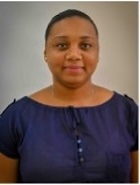
Eugenie Khani. Completed her MSc in Marine Science and Sustainability at the University of Seychelles. Her Research background includes Aquaculture and Climate change Resilience amongst others. She also assists with scientific research in both marine and terrestrial aspects; Develop, manage and implements small to medium size research projects, develop and support conservation monitoring programs, collaborate with and advise visiting scientists and students with their research and projects, Participate in conservation partnership and projects etc.

Barry Nourice Dr. Nourice holds a PhD and MSc in Soil Science from the University of Aberdeen and a BSc in Agriculture Science (Tamil Nadu Agriculture University, India), specialising in Soil Science and Organic Farming. With over 20 years of experience in agricultural research, soil diagnostics, laboratory management, and farmer-support services, Dr. Nourice has made significant contributions at both national and international levels. Notably, he served as an IAEA project counterpart, receiving global recognition in 2018, and has played a key role in soil management, climate reporting, and sustainable land use initiatives in Seychelles.
Dr. Nourice also previously served as a founding member and Chairman of the Agricultural Producers Association of Seychelles (APAS) and has a long-standing record of collaboration with farmers, environmental agencies, and regional and international partners.
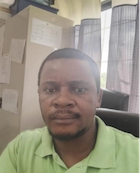
Kerapetse Kopelo. Currently holding a BSc Animal Sciences from the University of Botswana, and pursuing an Advanced Diploma in Education.His area of expertise is livestock production, covering;Animal health, nutrition(pasture establishment, fodder preservation and feed formulation), breeding (with special interest in Artificial insemination and other reprodutive technologies), animal identification and traceability system, innovative Agro-Food processing and green technology. Interested in pursuing post graduate(MSc) in Animal Sciences, with focus in Animal Nutrition, Animal Health or Animal Rproduction & Breeding
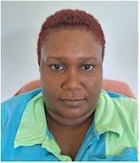
Joanna Philoe, a lecturer at the Seychelles Institute of Agriculture and Horticulture (S.I.A.H) for 6 years in the crop production field. She holds a Diploma in Secondary Education for Technology and Enterprise. Interested in environmental education programs related to agricultural areas, so as to help in sustaining the Agricultural sector and enhancing sustainable farming methods, by teaching to guide and encourage good practices. As a Seychellois innovator who once won recognition for creating an organic candy from noni fruit, she is focusing on pursuing training in Agro-processing of fruits, vegetables, and milk to encourage and ensure a healthy life and achieve food security.
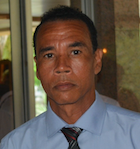
Kennet F. Esparon is a senior lecturer at Seychelles Institute of Agriculture and Horticulture - SIAH. Holding a Bachelor in Design Technology Education. Diploma in Agriculture Education and other certificates related to agriculture, floriculture, tissue culture, hydroponic and landscaping. He was selected to participate to China's fourth cohort od the Technical Vocational Education and Training TVET. He also participated in international seminars in Isreal on rural school and agriculture education for developing countries. Kennet went to Sri Lanka to follow training on protected agriculture cultivation and organic/bio dynamic agriculture
Giuseppe Merialdi is a Veterinarian with a PhD in Animal health. He has extensive and well-established experience in the fields of animal health and food safety, developed entirely within the Istituto Zooprofilattico Sperimentale della Lombardia e dell’Emilia-Romagna (IZSLER, Bologna, Italy), where he holds a director-level position. His work focuses primarily on the diagnosis of animal diseases and food safety, with a strong integration within the veterinary public health system.
AGENDA
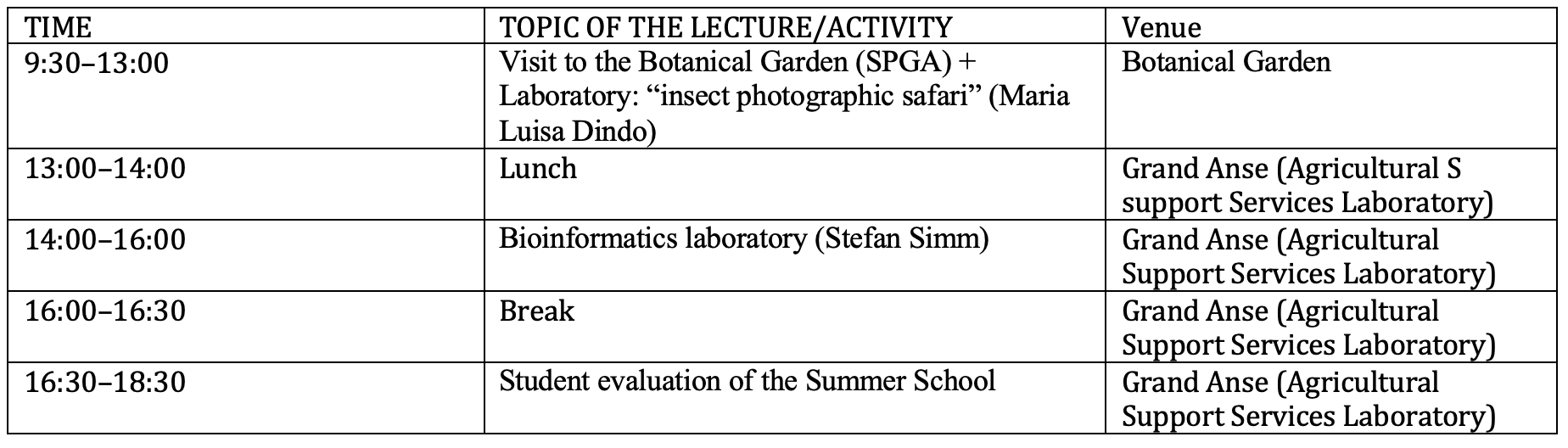
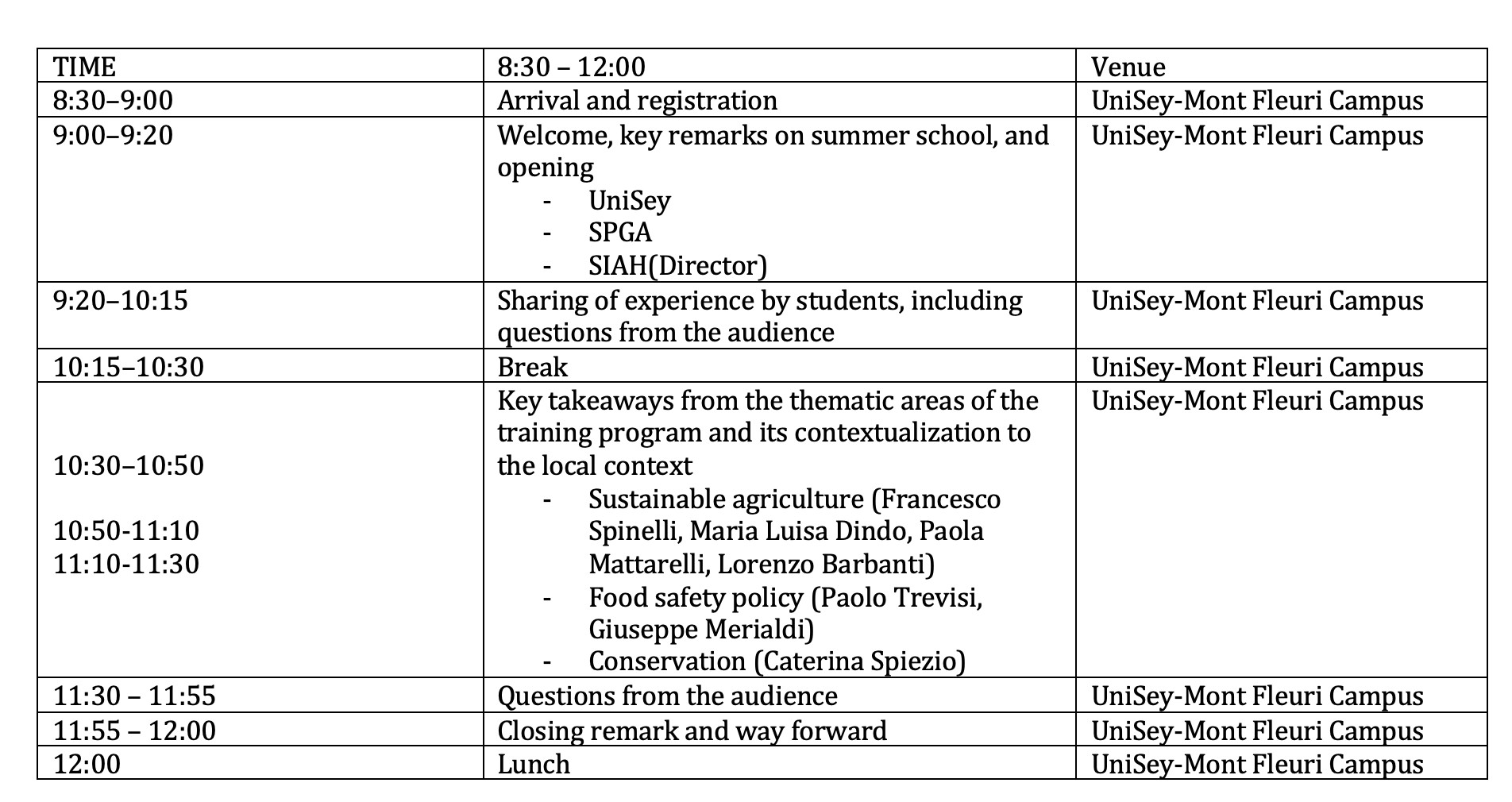
Presentation of the Summer School schedule divided by days and time slots.
DAY 1 – Monday, July 13th 2026
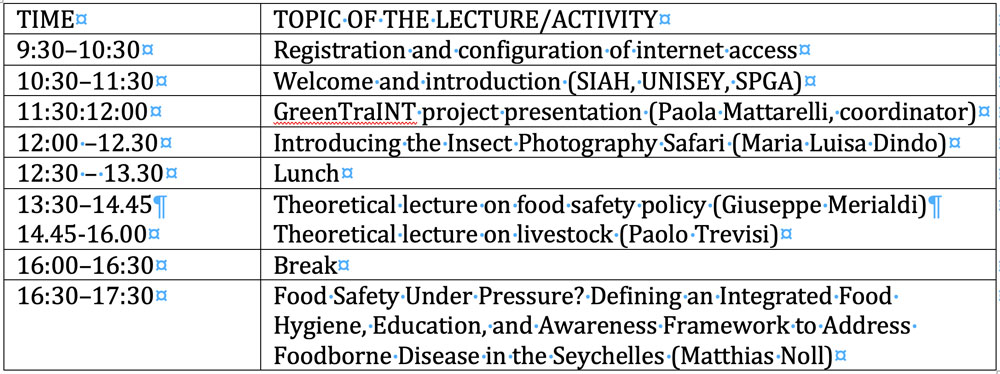
DAY 2 – Tuesday, July 14th 2026
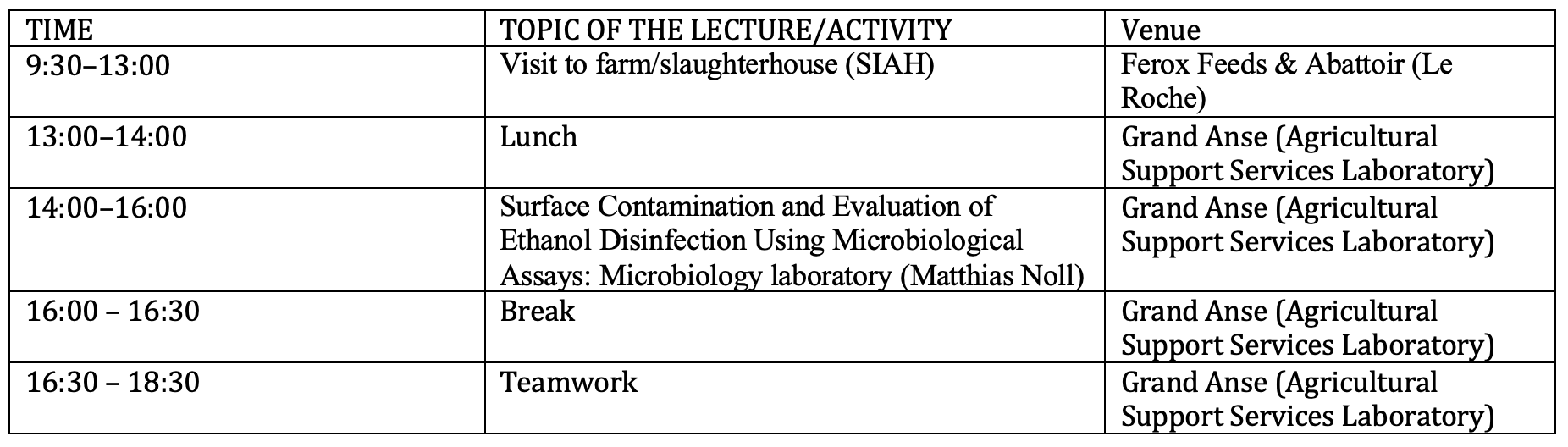
DAY 3 –Wednesday, July 15th 2026

DAY 4 – Thursday, July 16th 2026
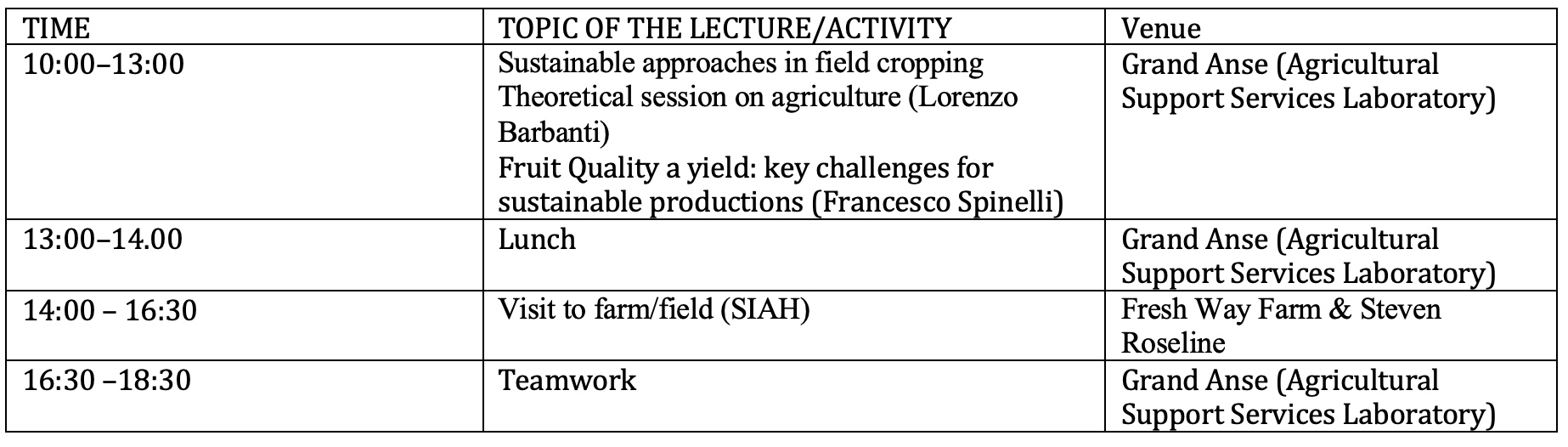
DAY 5 – Friday, July 17th 2026
DAY 6 – Saturday, July 18th 2026 – Multiplier Event @ Mont Fleuri
ORGANIZATION
LOCAL ORGANIZING COMMITTEE
Daniel Etongo, University of Seychelles
Uvicka Bristol, University of Seychelles
Eugenie Kani, University of Seychelles
Barry Nourice, Seychelles Institute of Agriculture and Horticulture
Keratepse Kopelo, Seychelles Institute of Agriculture and Horticulture
Allen Cedras, Seychelles Parks and Gardens Authority
Louisette Hoareau, Seychelles Parks and Gardens Authority
ADMINISTRATIVE & TECHNICAL ORGANIZATION
Meryl Brioche – Seychelles Institute of Agriculture and Horticulture
Benedetta Solari – University of Bologna
Elena Fuerler – University of Bologna
SCIENTIFIC COMMITTEE
Paola Mattarelli – University of Bologna
Maria Luisa Dindo – University of Bologna
Paolo Trevisi – University of Bologna
Francesco Spinelli – University of Bologna
Lorenzo Barbanti – University of Bologna
Elena Fuerler – University of Bologna
Stefan Simm – Coburg University of Applied Sciences
Matthias Noll – Coburg University of Applied Sciences
Caterina Spiezio – Openature Foundation ETS
Camillo Sandri – Openature s.r.l
Daniel Etongo – University of Seychelles
Uvicka Bristol – University of Seychelles
Eugenie Kani – University of Seychelles
Barry Nourice – Seychelles Institute of Agriculture and Horticulture
Keratepse Kopelo – Seychelles Institute of Agriculture and Horticulture
Joanna – Seychelles Institute of Agriculture and Horticulture
Kenneth – Seychelles Institute of Agriculture and Horticulture
Allen Cedras – Seychelles Parks and Gardens Authority
Louisette Houareau – Seychelles Parks and Gardens Authority